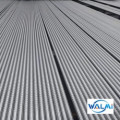
A Glimpse into the Production Workshop of Wenzhou Walmi Stainless Steel Co., Ltd.: Crafting High-Quality Seamless Stainless Steel Pipes with Ingenuity
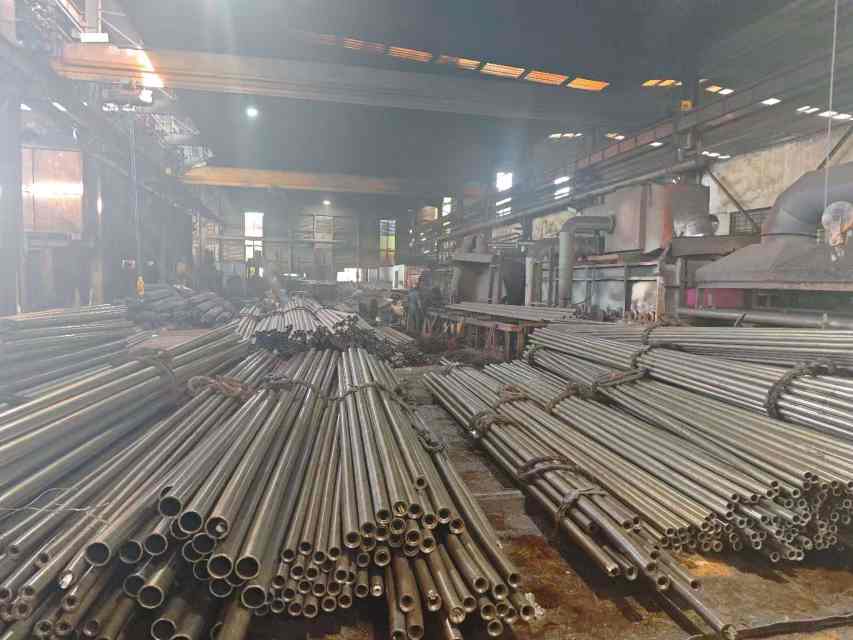
In Workshop 2, No. 3275-3283 Yongqiang Avenue, Shacheng Street, Longwan District, Wenzhou, the modern production workshop of Wenzhou Walmi Stainless Steel Co., Ltd. is showcasing the precision craftsmanship of seamless stainless steel pipe manufacturing. As a company deeply rooted in the stainless steel pipe industry for many years, Walmi takes “exceeding customer expectations” as its mission, focusing on the research and development and production of large-diameter and small-diameter seamless stainless steel pipes. Its products are widely used in petroleum, chemical, medical, and food industries.
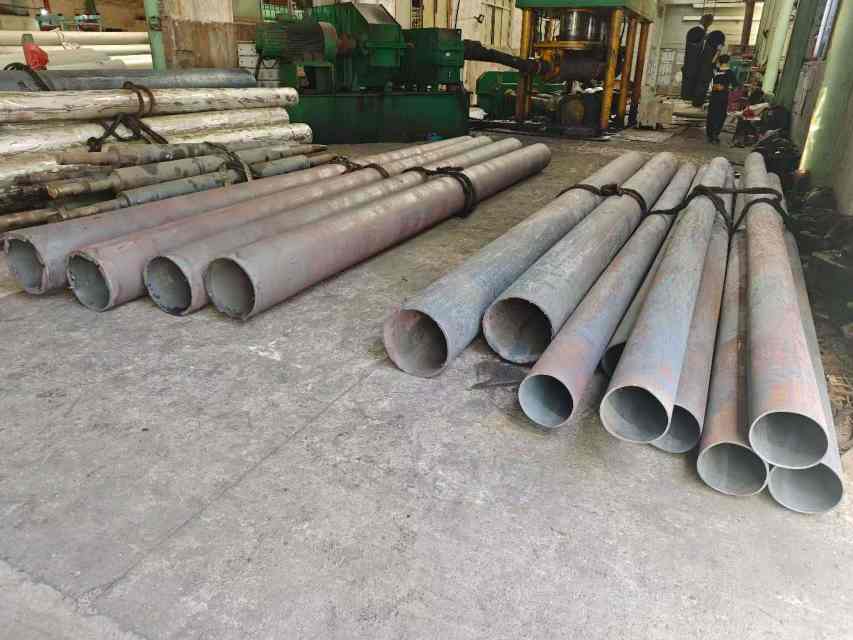
Workshop Panorama: The Fusion of Technology and Craftsmanship Upon entering the production workshop, the first thing that catches the eye is the neatly arranged piercing mill, cold rolling mill, and solution heat treatment furnace. According to the process flow, round steel billets are uniformly heated to above 850℃ in the heating furnace, and then initially formed by the piercing mill, followed by multiple cold rolling processes. During the cold rolling process, the steel pipe undergoes precise deformation in the annular die, ensuring dimensional accuracy and surface finish. The workshop is equipped with endoscopes, eddy current flaw detectors, and other equipment to detect internal defects in the pipes in real time, ensuring that every steel pipe meets national standards such as GB/T 14975-2002.
Production Differences Between Large and Small Diameter Pipes
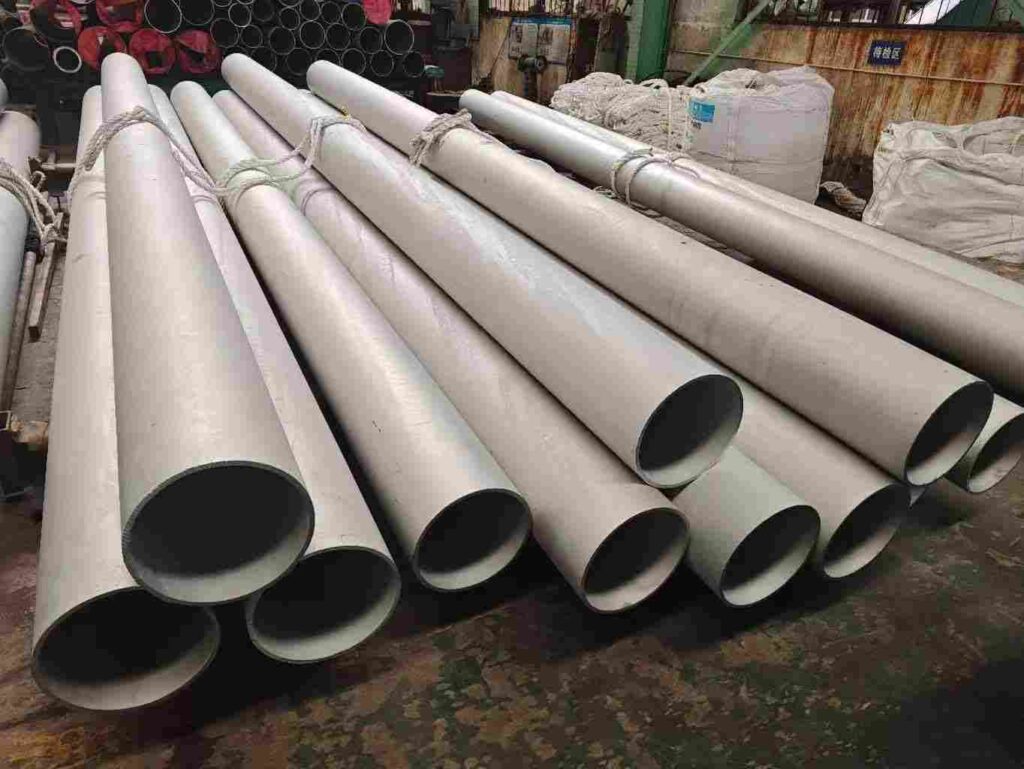
For large-diameter pipes (such as those 273mm and above), Walmi employs a unique process control strategy. Because material costs increase significantly with pipe diameter, and the production process presents greater technical challenges, the workshop is specially equipped with large-scale piercing units and chain-type cold drawing machines, and uses a weakly oxidizing atmosphere to reduce surface oxidation. Small-diameter pipes, on the other hand, focus more on surface treatment and dimensional accuracy, achieving a mirror finish after 400-mesh polishing, meeting the stringent requirements of sanitary-grade pipes.
Quality Control: Rigorous Control from Raw Materials to Finished Products
Walmi’s quality control extends throughout the entire production process. At the raw material stage, low-magnification and microstructure testing ensures the purity of the steel billets, avoiding the risk of cracks caused by non-metallic inclusions. During the heat treatment stage, a natural gas solution furnace is used to achieve rapid homogenization, preventing the decrease in plasticity caused by α-phase formation. Finished product inspection includes eddy current testing, hydrostatic testing, and pneumatic pressure testing to ensure that every steel pipe passes ISO 9001 quality system certification.
Green Production and Sustainable Development
The workshop layout follows the principle of “optimal process and efficient space,” with U-shaped designs for logistics channels and equipment arrangement to reduce material handling distances. Simultaneously, the equipped pickling wastewater treatment system and dust recovery device ensure that the production process meets environmental protection requirements. Walmi also continuously optimizes production processes and reduces energy consumption and carbon emissions through technological cooperation and independent research and development.
Conclusion
From round steel to finished pipes, every process at Walmi embodies a commitment to quality. Whether it’s the strength and toughness of large-diameter pipes or the precision and smoothness of small-diameter pipes, it reflects the company’s core values of “professionalism, reliability, and innovation.” In the future, Walmi will continue to be customer-oriented, promoting the green development and technological innovation of the stainless steel pipe industry, and providing global customers with higher quality products and services.