
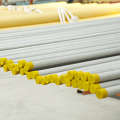
Introduction: Why Stainless Steel Hollow Bar Stands Out in Valves
Valves are the “control valves” of industrial systems, regulating the flow of fluids (liquids, gases, slurries) across sectors like oil & gas, water treatment, chemical processing, and power generation. Their performance depends heavily on material selection—especially for critical components that endure pressure, corrosion, and extreme temperatures. Among the many materials available, stainless steel hollow bar has emerged as a game-changer, offering a unique blend of strength, versatility, and cost-efficiency that solid bars or other alloys often can’t match. Let’s dive into how this underrated material is revolutionizing valve design and performance.
Core Advantages of Stainless Steel Hollow Bar for Valves
Before exploring specific applications, it’s essential to understand why stainless steel hollow bar is a top choice for valve manufacturers:
- Superior Strength-to-Weight Ratio: Hollow bars retain the high tensile strength and corrosion resistance of stainless steel (e.g., 304, 316, duplex grades) while being significantly lighter than solid bars. This reduces the overall weight of valves, making installation easier and lowering structural stress on piping systems—critical for large-scale industrial valves.
- Cost-Effectiveness: By using a hollow core, manufacturers reduce material usage without compromising performance. This translates to lower production costs, especially for large-diameter valves where solid bars would require excessive raw material. Additionally, the hollow structure simplifies machining (e.g., drilling, boring) since the core is pre-hollowed, cutting down on processing time and tool wear.
- Corrosion & Temperature Resistance: Stainless steel’s inherent resistance to rust, chemical erosion, and extreme temperatures (from cryogenic to high-heat environments) makes hollow bars ideal for valves handling aggressive media—think seawater, acids, alkalis, or high-pressure steam. Duplex stainless steel hollow bars take this further, offering enhanced corrosion resistance and strength for harsh offshore or chemical processing applications.
- Uniformity & Precision: High-quality stainless steel hollow bars are manufactured with tight dimensional tolerances and consistent wall thickness, ensuring reliability in critical valve components. This uniformity minimizes leakage risks and extends the valve’s service life.
Key Applications of Stainless Steel Hollow Bar in Valves
Stainless steel hollow bar is used in several critical valve components, each leveraging its unique properties:
1. Valve Stems
The stem is the “backbone” of a valve, transmitting force from the actuator to the closure element (e.g., ball, gate, disc). It must withstand tension, compression, and friction—all while resisting corrosion from the fluid and external environments.
- Why Hollow Bar?: Solid stems are heavy and expensive for large valves. Stainless steel hollow bars offer the same structural integrity with reduced weight, making them easier to operate and install. The hollow core also allows for heat dissipation in high-temperature applications (e.g., power plant valves) and can be used for lubrication channels to reduce friction.
- Common Grades: 316 stainless steel hollow bar is widely used for general-purpose valve stems, while duplex 2205 or super duplex 2507 are preferred for offshore or chemical processing valves handling corrosive media.
2. Valve Bodies & Bonnets (Large-Diameter Valves)
For large-diameter valves (e.g., 12 inches and above), solid steel bodies are impractical due to their weight and cost. Stainless steel hollow bars are used to fabricate the body and bonnet—either as seamless tubes or welded sections.
- Why Hollow Bar?: The hollow structure allows for efficient material usage, reducing the valve’s overall weight by 30-50% compared to solid construction. This is crucial for valves installed in hard-to-reach areas (e.g., offshore platforms) or where structural load is a concern.
- Application Example: In water treatment plants, large gate valves use 304 stainless steel hollow bar bodies to resist corrosion from chlorinated water, while maintaining the strength to handle high water pressure.
3. Ball Valve Balls & Gate Valve Gates
The closure element (ball or gate) is responsible for sealing the fluid flow. It must be durable, corrosion-resistant, and precise in shape.
- Why Hollow Bar?: For large ball valves, solid balls are cost-prohibitive and heavy. Stainless steel hollow bars are machined into hollow balls, offering the same sealing performance with reduced weight. The hollow core also helps balance pressure across the ball, reducing actuator force requirements.
- Precision Machining: Hollow bars’ tight dimensional tolerances ensure the ball or gate fits perfectly within the valve seat, minimizing leakage. 316L stainless steel hollow bar is ideal for this application due to its low carbon content, which improves weldability and corrosion resistance.
4. Valve Trim Components
Trim components (e.g., seats, discs, cages) are in direct contact with the fluid, making corrosion resistance and wear resistance critical.
- Why Hollow Bar?: Stainless steel hollow bars are machined into thin-walled trim parts, leveraging their corrosion resistance to handle aggressive media. For example, in control valves used in chemical plants, 2205 duplex hollow bar cages regulate fluid flow while resisting acid erosion.
Tips for Selecting & Using Stainless Steel Hollow Bar in Valves
To maximize performance, consider these factors when choosing stainless steel hollow bar for valves:
- Grade Selection: Match the stainless steel grade to the fluid type (e.g., 316 for corrosive media, 304 for non-corrosive applications) and operating conditions (temperature, pressure). Duplex grades are ideal for high-pressure, high-corrosion environments.
- Wall Thickness: Ensure the wall thickness is sufficient to withstand operating pressure. Engineers use pressure vessel calculations to determine the minimum wall thickness, balancing strength and weight.
- Quality Certification: Choose hollow bars with certifications like ASTM A269 (seamless stainless steel tubes) or ASTM A480 (flat-rolled stainless steel) to ensure compliance with industry standards.
- Machining Considerations: The hollow core simplifies machining, but it’s important to use sharp tools and proper cutting parameters to avoid wall deformation. Post-machining treatments (e.g., passivation) enhance corrosion resistance.
Future Trends: Stainless Steel Hollow Bar in Next-Gen Valves
As industries demand more efficient, durable, and sustainable valves, stainless steel hollow bar is poised to play an even bigger role:
- Lightweighting for Renewable Energy: In wind and solar power plants, lightweight valves are essential for reducing structural load. Stainless steel hollow bars will be used to fabricate valves for hydrogen storage and renewable fuel systems, where corrosion resistance and weight are critical.
- Advanced Alloys: The development of super duplex and nickel-based stainless steel hollow bars (e.g., Inconel) will expand their use in extreme environments—such as high-temperature nuclear valves or deep-sea oil & gas applications.
- Sustainability: By reducing material usage and extending valve life, stainless steel hollow bars contribute to sustainability goals, aligning with the industry’s shift toward eco-friendly manufacturing.
Conclusion
Stainless steel hollow bar may not be the most visible component in a valve, but it’s undoubtedly one of the most critical. Its unique combination of strength, light weight, corrosion resistance, and cost-efficiency makes it the material of choice for modern valve design—from small control valves to large-diameter industrial valves. As industries evolve and demand higher performance, stainless steel hollow bars will continue to drive innovation in valve technology, ensuring reliability, efficiency, and sustainability for years to come.
Whether you’re a valve manufacturer, engineer, or industry professional, understanding the benefits of stainless steel hollow bar can help you make better material choices and optimize your valve systems. Have questions about specific applications or grade selections? Feel free to share your thoughts in the comments!


